Tree sap on tent fabric: how to remove it safely without damage?
Tree sap on tent fabric is a common problem when camping under conifer trees. The sticky droplets adhere firmly to the fabric and harden over time. Good news: with the right approach, you can remove sap without damaging the fabric. This article walks you through it step by step.
Why is sap problematic for tent fabric?
Tree sap is a natural, sticky substance secreted by conifers. Once it lands on your tent fabric, it penetrates the fibres and adheres to the protective coating of the material. The longer it stays, the harder it becomes to remove.
That makes it important not to leave sap sitting too long. But even older sap stains can often be tackled, as long as you work carefully.
What not to do
Before you start, it helps to know which mistakes to avoid. Many people reach for a knife or an aggressive solvent, but that can do more harm than good.
- Don't scrape with sharp objects. This damages the fabric or the coating.
- Don't use household solvents. Turpentine, acetone or white spirit can damage the water-repellent layer of your tent fabric.
- Don't use a pressure washer. The pressure can damage fibres and seams.
- Don't rub on dry fabric. This can spread the sap stain and push it deeper into the material.
Removing sap: the safe approach
1. Let the sap harden first
Fresh sap is soft and sticky. If you work on it right away, you'll often spread it further. Let the sap harden first. In cold weather this happens faster. You can speed up the process by placing a bag of ice cubes on the area. The cold makes the sap brittle and easier to remove.
2. Carefully remove the hardened sap
Once the sap is hard and brittle, you can carefully pry off most of it with a blunt object - such as a plastic spatula or the back of a spoon. Work slowly and don't apply too much pressure. The goal is to loosen the top layer without damaging the fabric.
3. Treat the residue
After removing the hardened layer, a sticky residue often remains. You can carefully treat this with a little vegetable oil on a soft cloth. The oil dissolves the adhesive without affecting the fabric. Dab it onto the spot and let it soak in briefly. Then gently rub away the residue.
Note: test this on a small, inconspicuous area of the fabric first. Especially with cotton or canvas tent fabric, you want to make sure the material reacts well.
After removal: cleaning and protecting
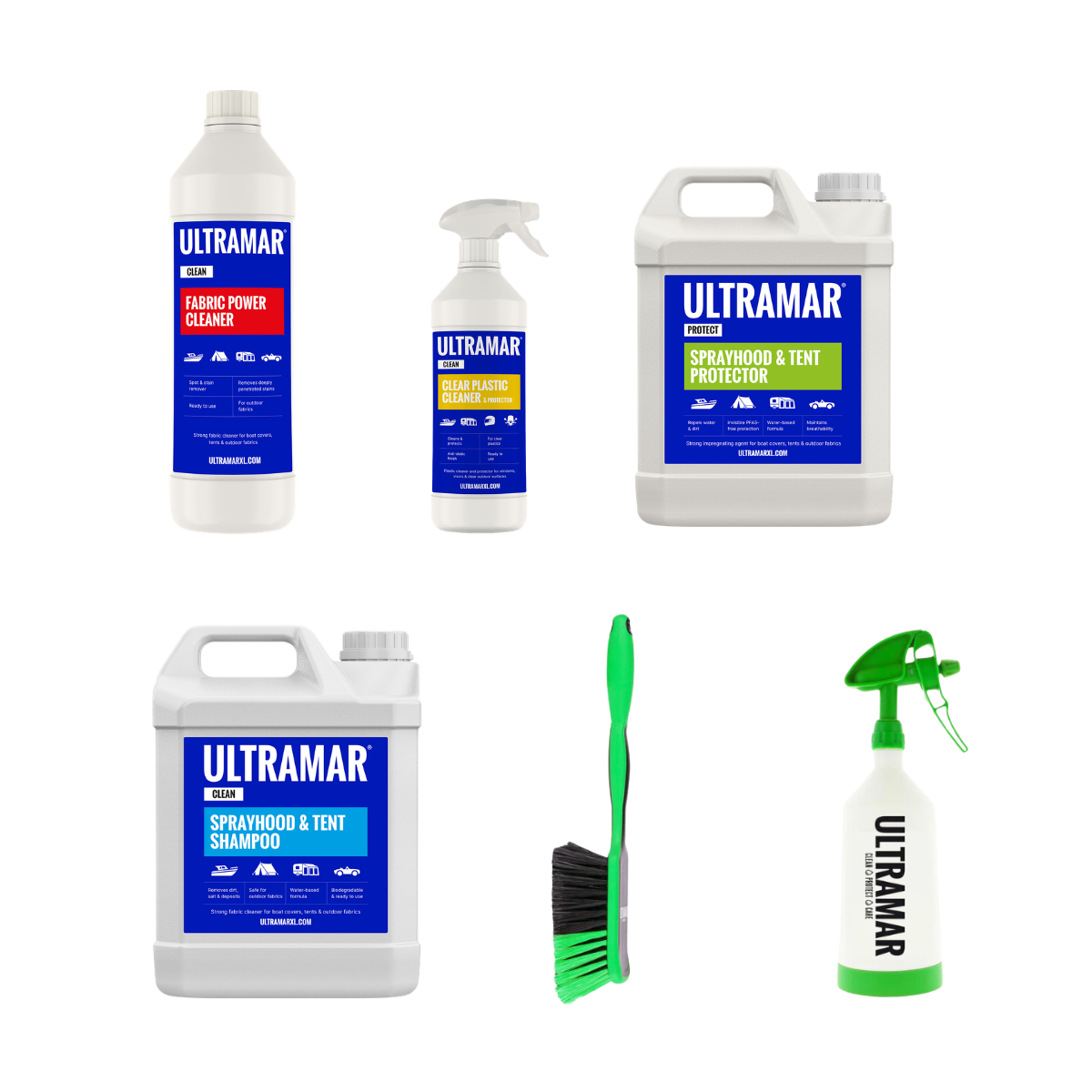
After removing the sap, there is often a grease stain or residue on the fabric. It is important to clean this thoroughly and then restore the fabric's protection. Follow Ultramar's 3-step plan.
Step 1: Clean
Wash the treated area with a mild cleaner suitable for outdoor textiles. Sprayhood & Tent Shampoo is designed for this. It removes the oil residue and dirt without affecting the coating. Use lukewarm water and a soft brush or sponge. Work in the shade if possible, so the product doesn't dry out too quickly.
Step 2: Remove stains
If there is still a visible discolouration or deep residue after cleaning, you can use Power Cleaner on that specific spot. This product is intended for stubborn stains that don't come out with regular cleaning. Apply it locally and let it work according to the instructions. Then rinse thoroughly.
Step 3: Protect
Removing sap and cleaning often reduces the water-repellent layer in that area. Apply a protective layer to restore the fabric's resistance to moisture and dirt.
- For synthetic tent fabric (acrylic, polyester): use Sprayhood & Tent Protector.
- For cotton or canvas tent fabric: use Canvas & Cotton Protector.
Let the fabric dry completely before applying the protection. This ensures even adhesion. Apply the product generously - too little product can give an uneven result.
Differences between fabric types
Not every tent fabric responds the same way to sap removal. Keep this in mind:
- Polyester and nylon: Relatively smooth fibres. Sap often doesn't penetrate as deeply. The ice method usually works well here. Watch out that you don't damage the coating when prying.
- Acrylic: Slightly rougher than polyester. Sap residue can sit deeper in the fibre. Take extra time for the oil treatment.
- Cotton and canvas: Natural fibres absorb more. Sap can penetrate more deeply here. Be extra careful with liquids and test first on an invisible section.
How to prevent sap on your tent fabric
Preventing it entirely is difficult if you want to camp under trees. But you can reduce the risk:
- Don't pitch your tent directly under conifers, but a few metres away.
- Use an extra tarp if you're staying in the same spot for a longer period.
- Well-protected tent fabric is easier to clean. Regular waterproofing also helps as a preventive measure.
Frequently asked questions
Can I remove sap if it has been on the fabric for weeks?
Yes, in many cases. Older sap is harder and often easier to break up with the ice method. The residue can be more stubborn, though. Take extra time for that and use Power Cleaner after cleaning if needed.
Does the oil method damage my tent fabric?
Vegetable oil is mild and in most cases does not damage the fabric. But test it first on an inconspicuous spot. After the treatment, it is important to clean the fabric thoroughly with a suitable shampoo, so no oily residue remains.
Do I need to re-waterproof the whole fabric after removing sap?
That depends on the situation. If you've only treated a small area, you can touch up locally with the right Protector. For a larger surface, or if the fabric is overdue for maintenance anyway, it makes sense to treat the whole fabric for an even result.
Which bundle do I need?
Ultramar offers maintenance bundles that combine the cleaner, stain remover and protector. Handy if you want to follow the full 3-step process. Bundles often offer a price advantage over buying separately. Choose a slightly larger pack than the minimum, so you have enough for smaller touch-ups later.
Summary
- Let sap harden first (with ice if needed) before removing it.
- Use a blunt, plastic object to loosen the hardened sap.
- Treat the residue with a little vegetable oil on a soft cloth.
- Clean the fabric afterwards with Sprayhood & Tent Shampoo.
- Use Power Cleaner for stubborn remaining stains.
- Restore protection with Sprayhood & Tent Protector for synthetic tent fabric.
- Always test each method first on an inconspicuous area of the fabric.