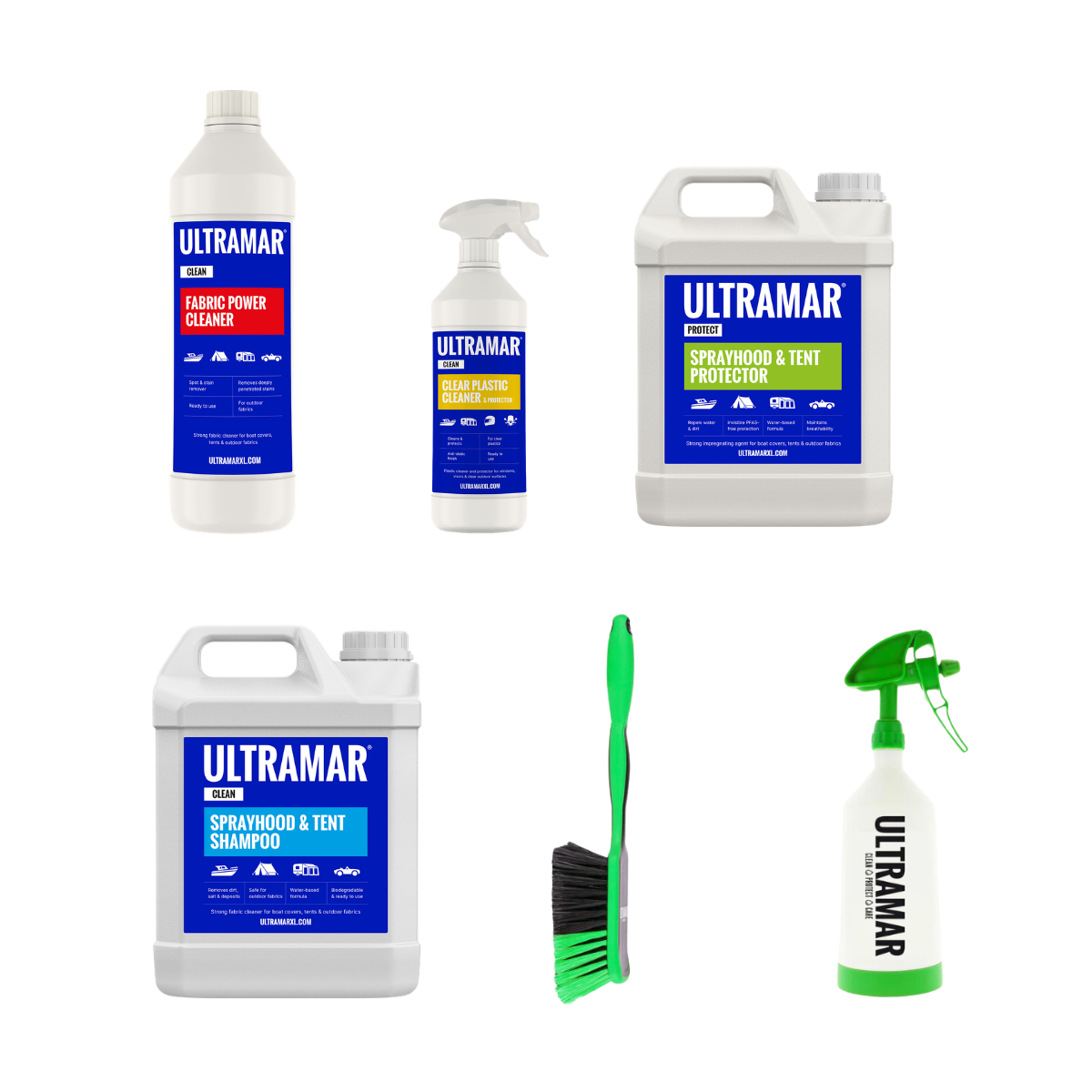
Your tent stands on the campsite for two or three weeks. During that time, the fabric is exposed to dust, bird droppings, tree sap, rainwater and condensation. Without interim maintenance, stains can set in and dirt becomes harder to remove when you get home. With a few targeted products in your camping kit, you keep the tent fabric fresh and prevent small stains from becoming bigger problems.
Why interim maintenance makes a difference
Many people wait until after the holiday to clean their tent. That's possible, but there is a downside. Dirt that stays on the fabric for weeks sinks deeper into the fibres. Especially in heat and moisture, contamination adheres to the surface more quickly. A bird dropping removed the same day usually leaves no trace. That same dropping baked into the sun for two weeks? Then you're dealing with a stubborn discolouration.
Interim maintenance doesn't have to be a big project. It's about a few minutes of attention at the right moment. That saves you far more work at home.
What problems arise during a camping trip?
- Dust and sand - cling to the fabric and make the surface rough
- Bird droppings and tree sap - soak in quickly in heat and damage the water-repellent layer
- Rain streaks and limescale deposits - visible as white or grey streaks after drying
- Damp patches - caused by condensation or prolonged contact with wet ground
- Stains on plastic windows - from sap, insect remains or sunscreen
How quickly this happens depends on the pitch. Under trees you get sap and bird droppings sooner. In an open field, dust and UV exposure play a bigger role.
What to pack? Products for interim tent care
1. Sprayhood & Tent Shampoo - for interim cleaning
This is your essential product on the campsite. With Sprayhood & Tent Shampoo you remove surface dirt, dust and light stains without damaging the fabric. The product is pH-neutral and suitable for both synthetic tent fabric and coated polyester. You don't need a pressure washer - a soft brush or sponge and a bucket of water are sufficient.
Use it as soon as you notice visible soiling. The sooner you clean, the less product you need and the better the result.
2. Power Cleaner - for stubborn stains that won't shift
Sometimes shampoo isn't enough. Think of dried bird droppings, sap stains or dark discolouration that has been sitting on the fabric for several days. Power Cleaner is a stain remover for deeply ingrained contamination. Apply it directly to the stain - not over the entire fabric.
Test it first on a small, inconspicuous area. Leave it to work briefly and rinse well with clean water. Use Power Cleaner only where truly needed.
3. Sprayhood & Tent Protector or Canvas & Cotton Protector - for restoring water repellency
After cleaning, the water-repellent layer on the treated area is often reduced. Apply the right protector afterwards to restore that protection. This is especially useful if you've cleaned a section of fabric mid-holiday and rain is expected.
Treat synthetic tent fabric with Sprayhood & Tent Protector. Do you have a cotton or canvas tent? Use Canvas & Cotton Protector instead - specifically suited to natural fibres and allows the fabric to breathe.
Important: the fabric must be completely dry before applying the protector. Plan it on a dry, warm day - preferably in the shade. This allows the product to dry evenly without streaking.
The Ultramar 3-step plan - on the campsite too
The principle remains the same as at home:
- Clean - Sprayhood & Tent Shampoo removes dirt and cleans the surface
- Remove stains - Power Cleaner tackles stubborn discolouration where shampoo is not enough
- Protect - Sprayhood & Tent Protector or Canvas & Cotton Protector restores water-repellent performance
On the campsite, you don't necessarily need to carry out all three steps. For a light clean, step 1 is often sufficient. Spotted a stubborn stain? Add step 2. Cleaned a larger area? Step 3 is recommended before the weather changes.
Don't combine the steps in one go. Let each step dry before moving on.
Practical tips for campsite maintenance
- Remove bird droppings and sap the same day. The longer it sits, the deeper it penetrates.
- Use lukewarm water. Cold water is less effective at dissolving dirt. Hot water can damage coatings.
- Work with a soft brush or microfibre sponge. Abrasive pads and stiff brushes damage the fabric.
- Clean in the shade where possible. Direct sunlight causes the product to dry too quickly, which can leave streaks.
- Allow the fabric to dry completely after cleaning. This is especially important before applying a protector.
- Don't use household cleaning products. Washing-up liquid, green soap or all-purpose cleaners can damage the tent fabric and coating.
- Don't use a pressure washer on tent fabric. The pressure can damage seams and cause coatings to detach.
How much product should you take?
That depends on how long you're away and how large your tent is. For a two to three week holiday with a family tent, it's wise not to cut things too short. Running out of product mid-holiday is inconvenient - especially on a remote campsite.
Better to take a slightly larger pack than the minimum. What you don't use on holiday, keep for the end of the season when you carry out a thorough maintenance.
Ultramar offers maintenance bundles for tents that combine the right products. These are often better value than buying individually, and you won't forget anything to pack.
How do you recognise when maintenance is needed?
- Water no longer beads off - the fabric absorbs rainwater instead of repelling it. Time to protect.
- Visible stains or discolouration - the sooner you treat them, the better the result.
- The fabric feels greasy or sticky - often caused by sap or air pollution. Cleaning is needed.
- Grey or green build-up is starting to form - a sign that dirt is accumulating and the surface is inadequately protected.
Frequently asked questions
Can I just rinse my tent with water?
Water alone removes loose dust and sand, but doesn't dissolve greasy or organic stains. Rinsing is fine as an intermediate step for surface dust. For proper cleaning, use Sprayhood & Tent Shampoo.
Can I apply the protector to a damp fabric?
No. The fabric must be completely dry. Moisture under the protective layer can cause an uneven result or streaking. Wait until the fabric has dried completely.
Does the same shampoo work for a polyester tent and a cotton tent?
Sprayhood & Tent Shampoo is suitable for both fabric types. The difference lies in the protection step: synthetic fabric gets Sprayhood & Tent Protector, cotton or canvas tents get Canvas & Cotton Protector.
Should I treat my whole tent or just the dirty areas?
On the campsite you can focus on the dirty patches. A full maintenance treatment is usually done at home at the end of the season. Targeted work is sufficient in between.
Summary: what to pack for interim tent care
- Sprayhood & Tent Shampoo - for cleaning dirt and light stains
- Power Cleaner - for stubborn, deeply ingrained stains
- Sprayhood & Tent Protector or Canvas & Cotton Protector - for restoring water repellency after cleaning
- A soft brush or sponge
- A bucket for lukewarm water
With this kit you're prepared for the most common situations on the campsite. A few minutes of attention at the right moment keeps your tent in good condition for the rest of your holiday.